How NASA Actually Tests Cameras Before Sending Them to Space
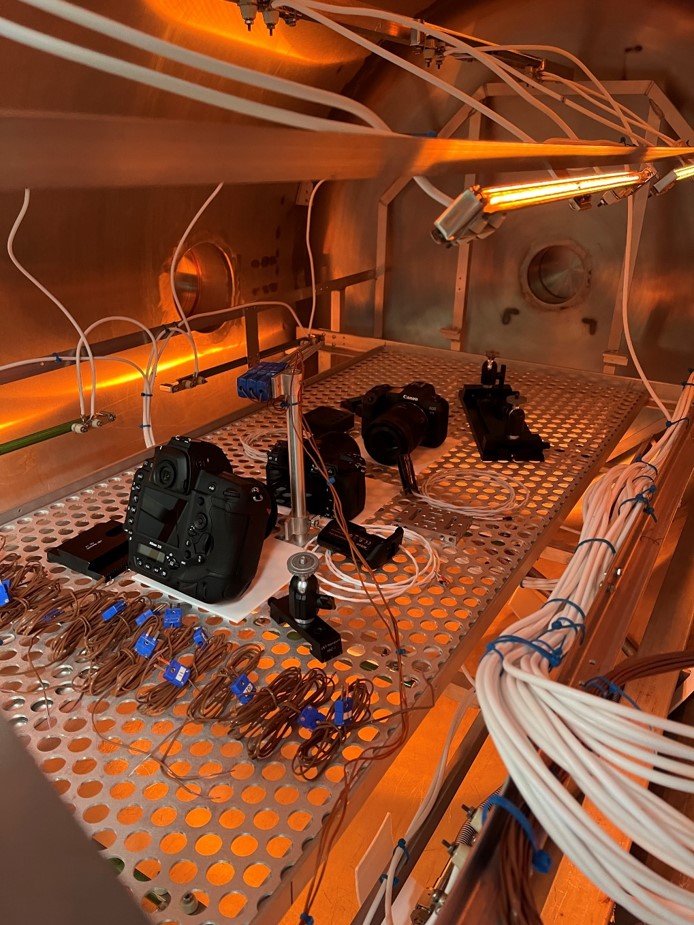
NASA's camera testing process is essentially the most brutal real-world reliability audit any body will ever go through, and the results are worth knowing. The Canon R5 came through with no critical failures. The Nikon Z7 II didn't finish testing at all, knocked out by connectivity issues inside the vacuum chamber. And despite having newer mirrorless options on the table, NASA strapped a Nikon D5 to Artemis II because it already had ISS hours logged and high-ISO performance that holds up where it counts. The practical takeaway for working photographers isn't about space. It's about what actually survives when manufacturer specs meet real environmental stress. SanDisk led on card reliability too, if you're the kind of person who reads footnotes before a big job.
Related
Panasonic L10: The LX100 Successor That Actually Fixes Everything
Canon EOS R8 Mark II: IBIS Added, 40 fps, Under $1,900
Sony FX5 Announced: Full-Frame 5K, Internal X-OCN RAW, 4K 240p
Leica SL3-P Review: 44MP, 40fps Full-Frame at $6,695
GoPro enters the interchangeable lens market with MFT mount
Insta360 Is Building a Micro Four Thirds Camera
More from Imaging Resource
Stay ahead of the curve
Get the Pixelfetch digest delivered to your inbox every morning.